
5 High-End Hotels Defining Riyadh’s Hospitality Growth

Riyadh’s hospitality sector is undergoing a quiet but powerful transformation. Once dominated by functional business hotels, the city is now home to luxury properties that compete on experience, design, and service, not just location. These five hotels represent the new face of high-end hospitality in the Saudi capital and play a central role in shaping Riyadh as a global destination.
Four Seasons Hotel Riyadh at Kingdom Centre
The Property
Located within the iconic Kingdom Centre tower, Four Seasons Hotel Riyadh occupies the upper floors of one of the city’s most recognizable landmarks. The property delivers a refined vertical hotel experience, combining understated interiors with sweeping views across the capital.
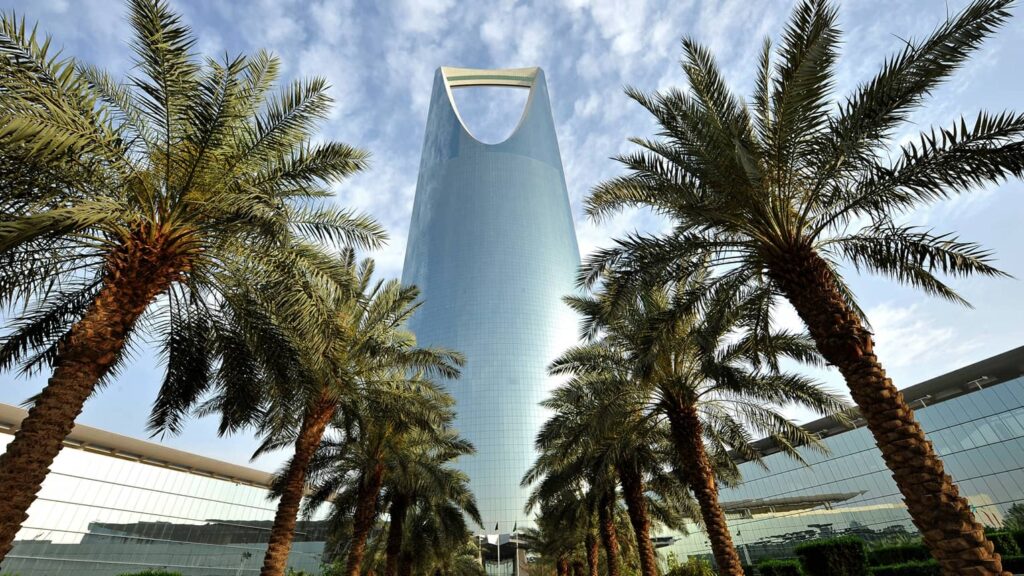
Credit: Four season Official website
Rooms & Suites
- Approximately 274 rooms and suites
- Floor-to-ceiling windows
- Spacious marble bathrooms
- Designed for privacy and comfort
Facilities
- Multiple fine-dining restaurants
- Luxury spa and wellness centre
- Fitness facilities
- Business and meeting spaces
Why It Matters
Four Seasons set the early benchmark for international luxury hospitality in Riyadh and continues to attract diplomats, executives, and high-profile guests.
Best Thing About It
The skyline views — among the most impressive hotel perspectives in the city.
Book your stay from HERE
The Ritz‑Carlton, Riyadh
The Property
The Ritz-Carlton Riyadh is designed on a palace scale, surrounded by landscaped gardens and expansive grounds. Its architecture and interiors emphasize grandeur, symmetry, and classic luxury rather than urban minimalism.
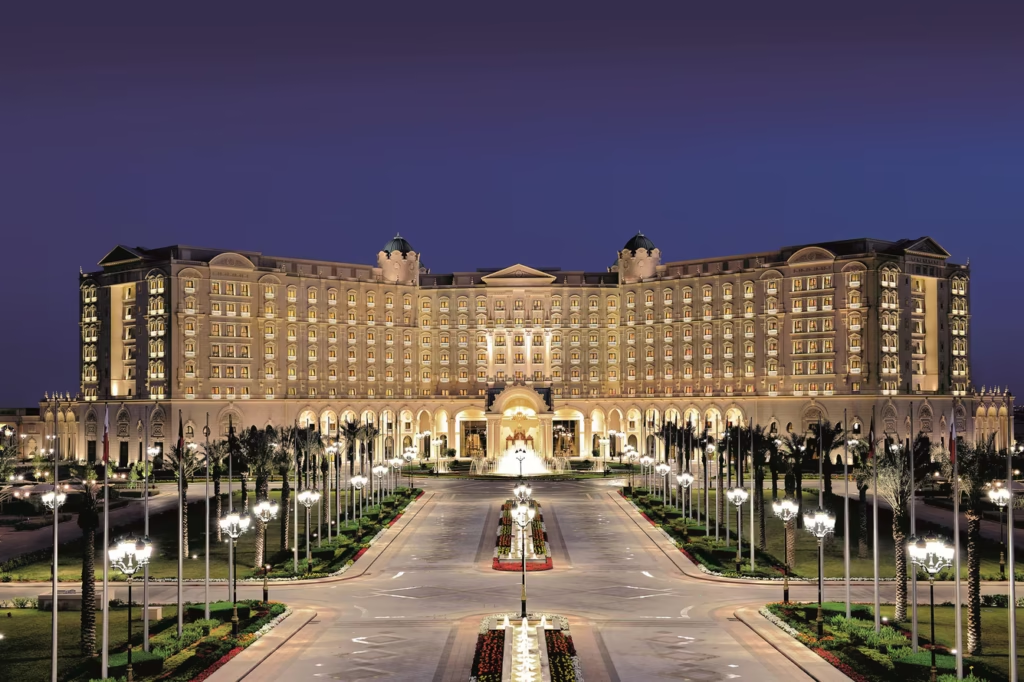
Credit: The Ritz‑Carlton, Riyadh Official website
Rooms & Suites
- Approximately 493 rooms and suites
- Large layouts with traditional detailing
- Designed for long stays and major events
Facilities
- Extensive ballroom and event venues
- Multiple restaurants and lounges
- Spa and wellness centre
- Gardens and outdoor spaces
Why It Matters
The hotel has become a symbol of prestige in Riyadh, hosting international delegations, government events, and high-profile celebrations.
Best Thing About It
Its scale and sense of occasion — few hotels in the city deliver such ceremonial presence.
Book your stay from HERE
Fairmont Riyadh
The Property
Fairmont Riyadh blends modern architecture with functional luxury, appealing to business travelers and event guests. The property is known for its efficient layouts, refined interiors, and seamless service.
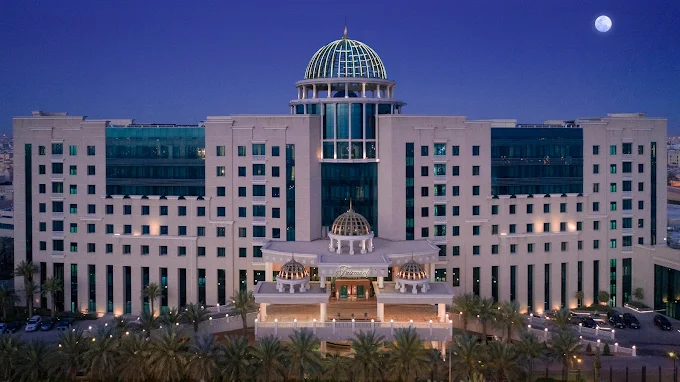
Credit: Fairmont Riyadh Official website
Rooms & Suites
- Around 298 rooms and suites
- Contemporary design
- Work-friendly layouts
- Suitable for extended business stays
Facilities
- Multiple dining venues
- Large conference and meeting spaces
- Wellness and fitness facilities
- Executive lounges
Why It Matters
Fairmont reflects Riyadh’s growing role as a regional business and events hub, supporting conferences, exhibitions, and corporate travel.
Best Thing About It
Its balance between business efficiency and luxury comfort.
Book your stay from HERE
The St. Regis Riyadh
The Property
The St. Regis Riyadh introduces a more intimate, lifestyle-driven luxury experience. Its interiors focus on craftsmanship, detail, and refined elegance, delivering a personalized atmosphere rather than scale-driven luxury.
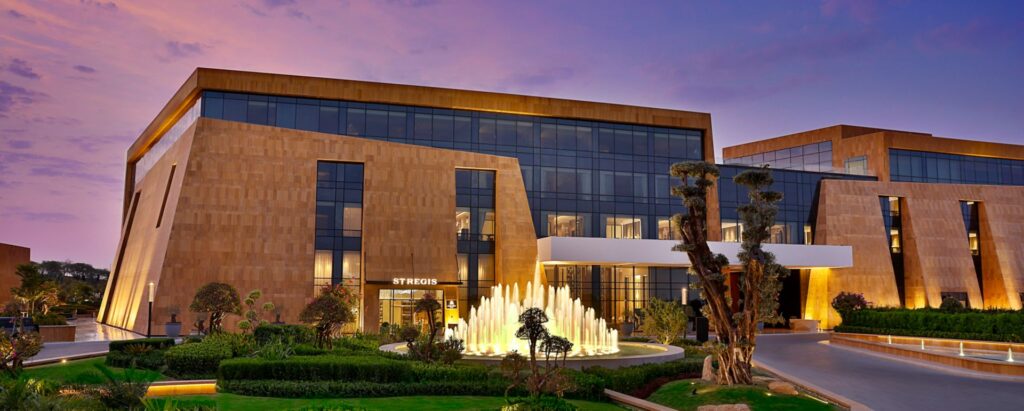
Credit: The St. Regis Riyadh Official website
Rooms & Suites
- Approximately 83 rooms and suites
- Boutique-style layouts
- High-end finishes and furnishings
Facilities
- Signature dining venues
- Spa and wellness facilities
- Fitness centre
- Personalized butler service
Why It Matters
The St. Regis elevates Riyadh’s hospitality offering by emphasizing bespoke service and refined living over size and spectacle.
Best Thing About It
The service philosophy — personalized, discreet, and detail-oriented.
Book your stay from HERE
Mövenpick Hotel & Residences Riyadh
The Property
Mövenpick Hotel & Residences Riyadh offers a hybrid hospitality model, combining hotel services with serviced residences. It caters to both short-term guests and long-stay visitors seeking flexibility and comfort.
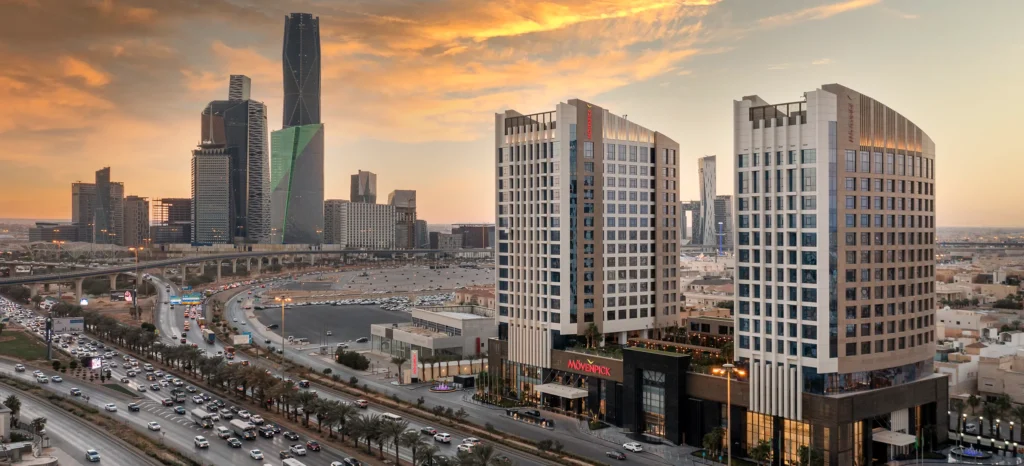
Credit: Mövenpick Hotel & Residences Riyadh Official website
Rooms & Residences
- Over 350 hotel rooms and serviced residences
- Apartment-style living options
- Designed for business travelers and families
Facilities
- Multiple restaurants and cafés
- Meeting and event spaces
- Wellness and fitness facilities
- Family-friendly amenities
Why It Matters
The property reflects Riyadh’s evolving accommodation needs, where extended stays, flexibility, and lifestyle convenience are increasingly important.
Best Thing About It
Its residential concept — ideal for long stays without compromising hotel-level service.
Book your stay from HERE
Conclusion
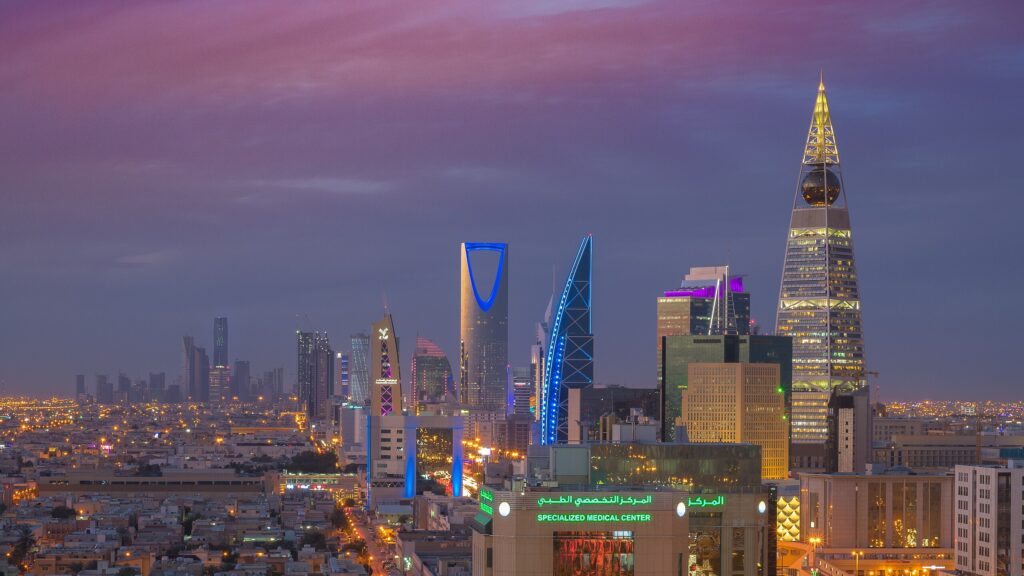
The rise of luxury and premium hotels in Riyadh signals a broader shift in the city’s global positioning. These properties are responding to new traveler expectations, increased international visibility, and a growing demand for refined experiences. Together, they illustrate how hospitality has become a key pillar in Riyadh’s transformation, supporting tourism growth while reinforcing the city’s role as a regional business and lifestyle hub.
Credit: Wikipedia Official website