
Why Hospitality Is Becoming a Key Business Sector

For years, hospitality in Riyadh was viewed as a supporting industry, functional, necessary, but rarely strategic. Hotels served business travelers, restaurants catered to meetings and family gatherings, and tourism played a limited role in the city’s economic narrative. Today, that perception has fundamentally changed.
Hospitality is no longer operating on the sidelines of Riyadh’s economy. It has become an active driver of business growth, international visibility, and investment momentum. From large-scale hotels and dining concepts to events, exhibitions, and lifestyle destinations, hospitality now sits at the intersection of commerce, culture, and urban development.
Credit: UnSplash Official website
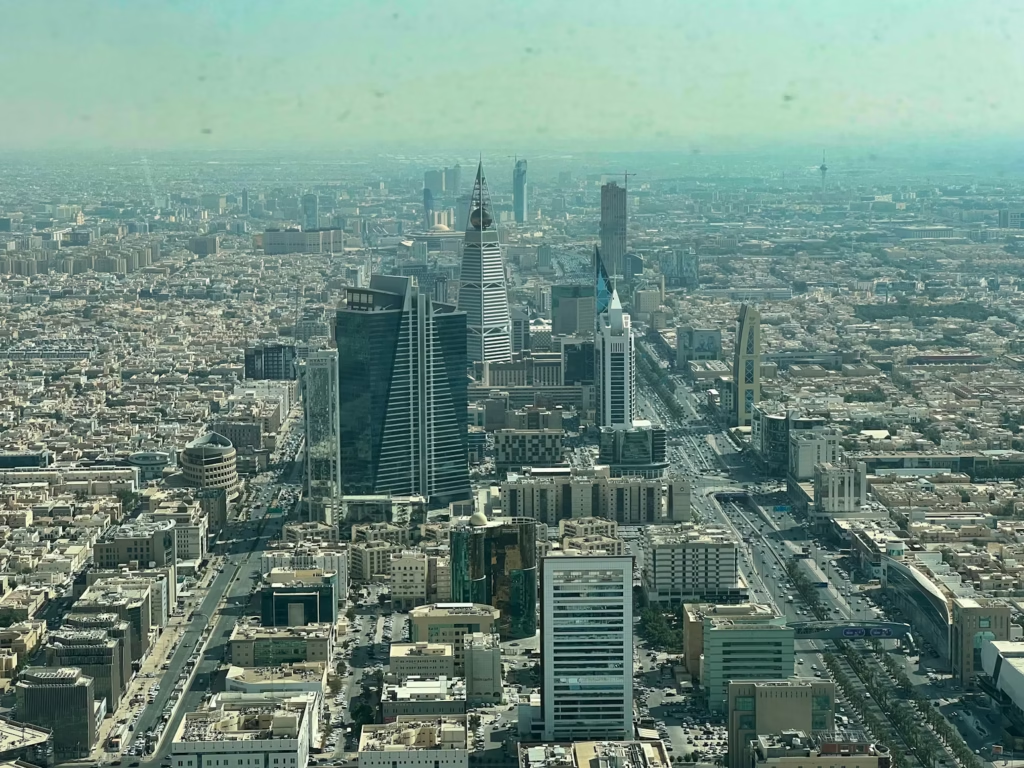
Riyadh’s transformation is closely linked to broader national ambitions. As Saudi Arabia positions itself as a global business and tourism destination, the capital has taken center stage. The city now hosts international conferences, cultural events, corporate headquarters, and regional offices at an unprecedented scale.
This shift has created a new type of demand, one that goes beyond accommodation. Executives, investors, and international visitors expect complete experiences, not just functional services. Hospitality has stepped in to meet that expectation, evolving from a background service into a strategic economic layer that supports business confidence and global engagement.
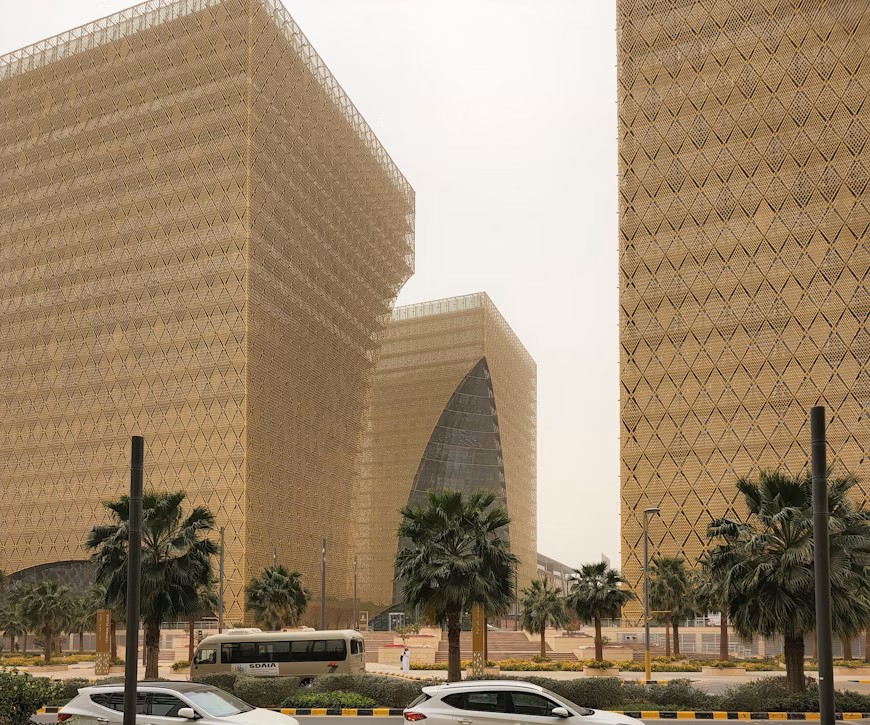
Business District / Financial Area
Credit: UnSplash Official website
Hospitality as an Economic Engine
At its core, hospitality contributes far more than rooms and meals. It activates entire economic ecosystems. Hotels generate employment across operations, management, logistics, and services. Restaurants support supply chains, local producers, and creative talent. Event venues and convention centers attract international traffic that benefits transportation, retail, and real estate.
In Riyadh, this multiplier effect has become increasingly visible. Large hotels are no longer designed only for overnight stays; they are built as multi-purpose business hubs, hosting meetings, exhibitions, launches, and high-level gatherings. Dining venues have evolved into networking spaces where deals are discussed as often as dishes are shared.
The result is a hospitality sector that fuels productivity, connectivity, and economic circulation.
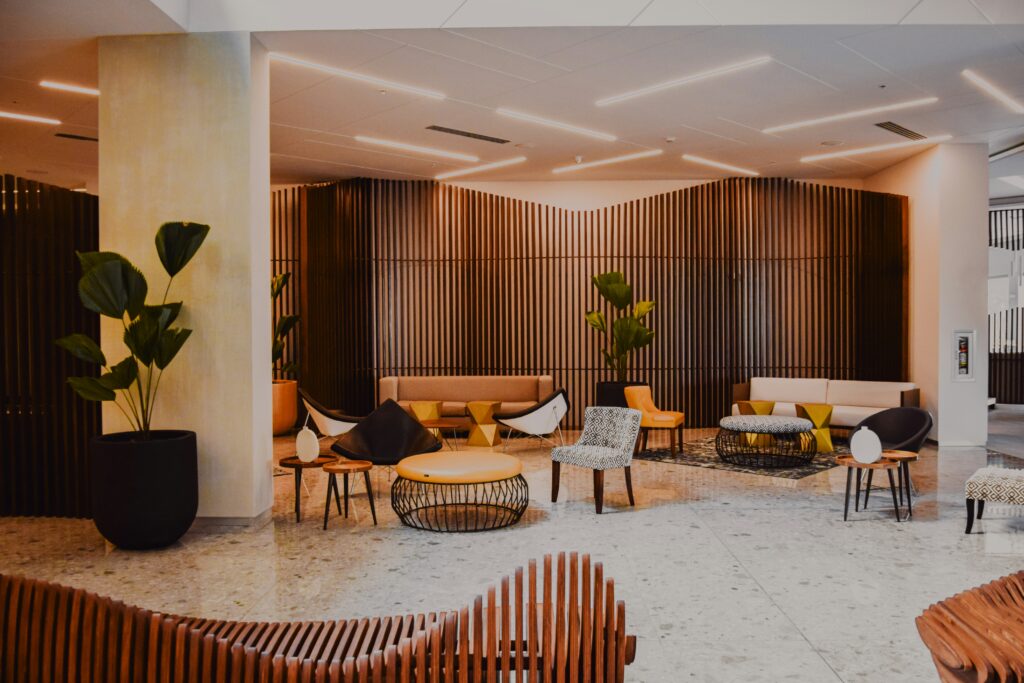
Hotel Lobby or Conference Space
Credit: UnSplash Official website
Why Businesses Are Investing in Hospitality Now
The surge in hospitality investment is not accidental. Several factors are converging to make Riyadh one of the most attractive markets in the region.
First, business travel has intensified. With more multinational companies establishing regional headquarters in the city, demand for high-quality accommodation and meeting facilities has grown steadily.
Second, Riyadh’s role as an events and exhibitions hub has expanded. From global forums to industry-specific conferences, the city now requires hospitality infrastructure capable of handling scale, security, and international standards.
Third, there is a noticeable shift in lifestyle expectations. Professionals relocating to Riyadh whether from within the region or abroad, expect dining, wellness, and leisure experiences that match global capitals. Hospitality brands that understand this shift are positioning themselves early to capture long-term value.
Hospitality as a Brand Signal
Beyond economics, hospitality plays a powerful role in shaping perception. Hotels, restaurants, and lifestyle destinations often form a visitor’s first impression of a city. In Riyadh, this has become especially important as the capital welcomes more international audiences.
High-quality hospitality signals confidence, readiness, and ambition. It tells investors and partners that the city understands global standards and can deliver consistently. This is why hospitality is now closely linked to city branding, business diplomacy, and international positioning.
Riyadh’s hospitality offerings are no longer neutral backdrops, they are part of the city’s narrative.
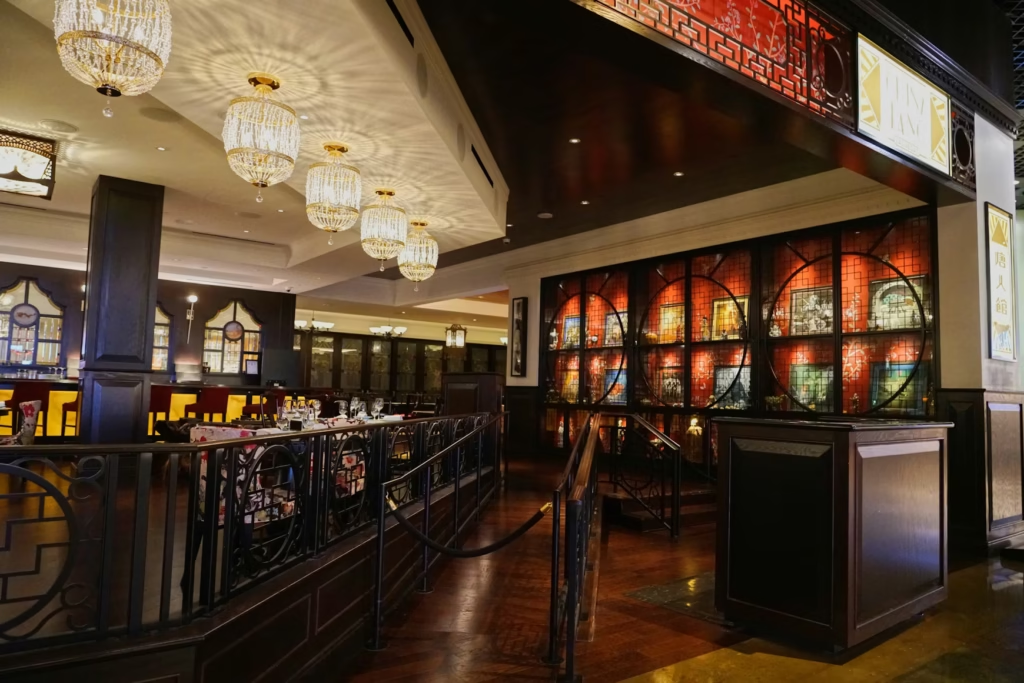
High-End Restaurant or Dining Space
Credit: UnSplash Official website
What This Means for the Business Community
For businesses operating in Riyadh, the rise of hospitality presents both opportunities and expectations.
Companies now have access to environments that support networking, client engagement, and corporate events at a higher level. At the same time, competition has increased. As standards rise, hospitality operators must differentiate through experience, service quality, and relevance — not just scale.
This dynamic encourages innovation. Hotels integrate co-working concepts, restaurants design menus and spaces for social business interaction, and venues tailor experiences for specific industries and audiences. Hospitality, in this sense, becomes a platform for collaboration rather than a standalone service.
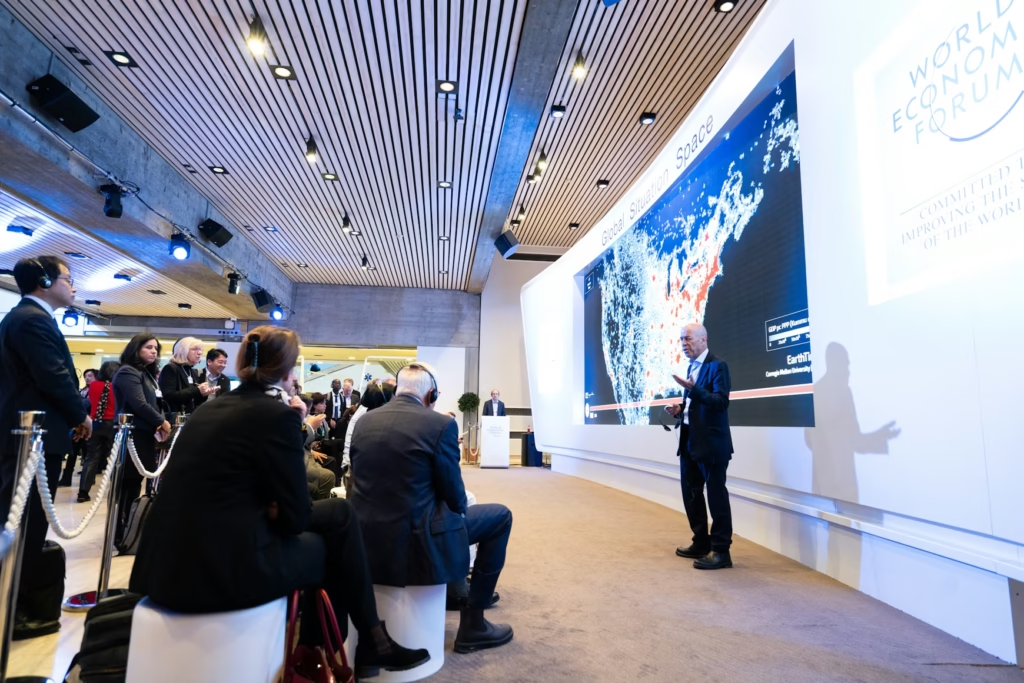
Corporate Event or Networking Space
Credit: UnSplash Official website
A Sector with Long-Term Strategic Value
Looking ahead, hospitality’s role in Riyadh is set to deepen. As tourism initiatives expand and international engagement increases, the sector will continue to attract investment and talent. More importantly, it will shape how the city functions on a daily basis as a place to work, connect, and grow.
Hospitality is no longer responding to demand; it is anticipating it. And in doing so, it has positioned itself as one of Riyadh’s most strategically important business sectors.
Final Take
Hospitality in Riyadh has crossed a critical threshold. It is no longer a secondary industry operating behind the scenes, but a central pillar supporting business growth, international engagement, and urban identity. As the city continues its transformation, hospitality will remain a key force not just welcoming visitors, but actively shaping the future of Riyadh’s economy.